Temperature measurement and control
Thermocouples, PT100–PT1000 resistance thermometers and sensor assemblies for high-temperature service.
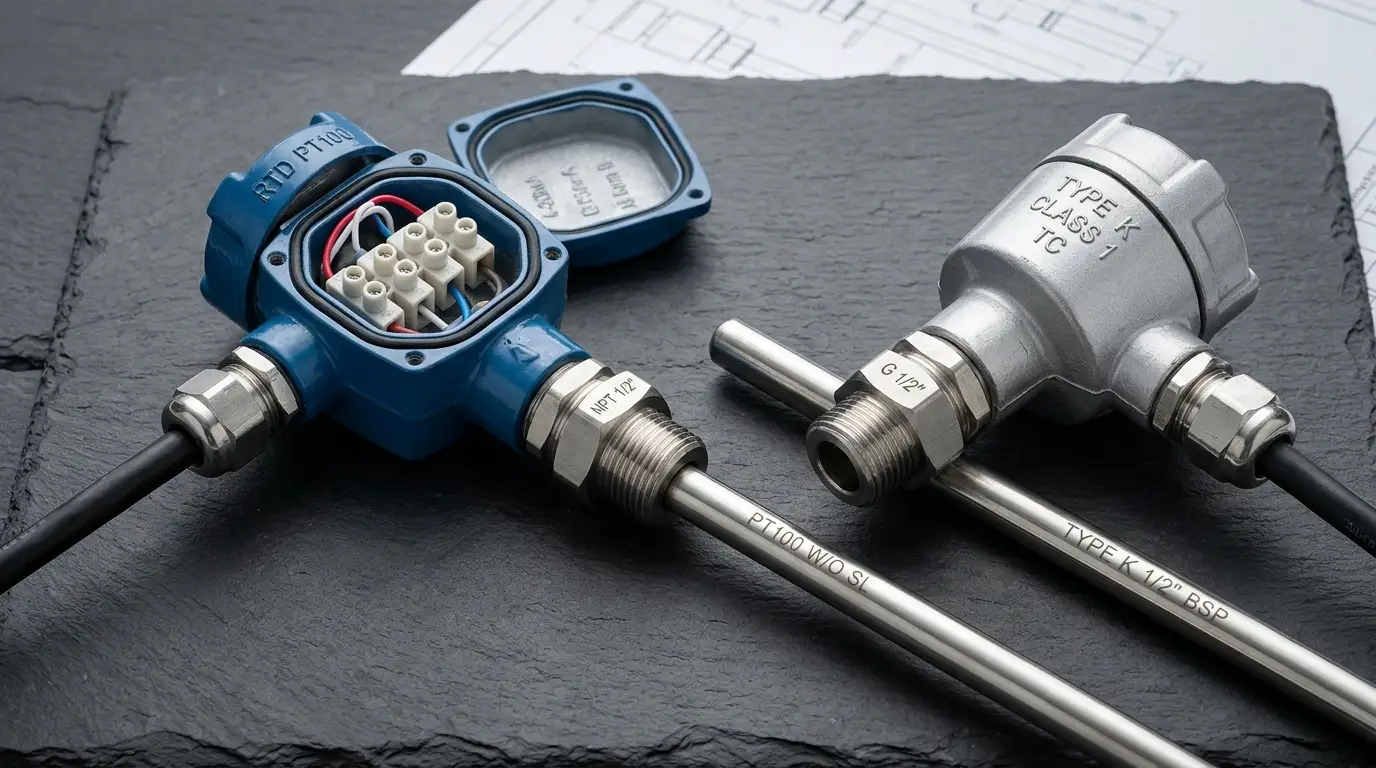
Reliable readings where the process runs hot
Temperature is one of the most closely controlled variables in polymer and chemical processing. Thermocouples generate a voltage at the junction of two dissimilar metals and cover a wide temperature range; resistance thermometers such as the PT100 and PT1000 measure the change in resistance of a platinum element and offer high accuracy and stability.
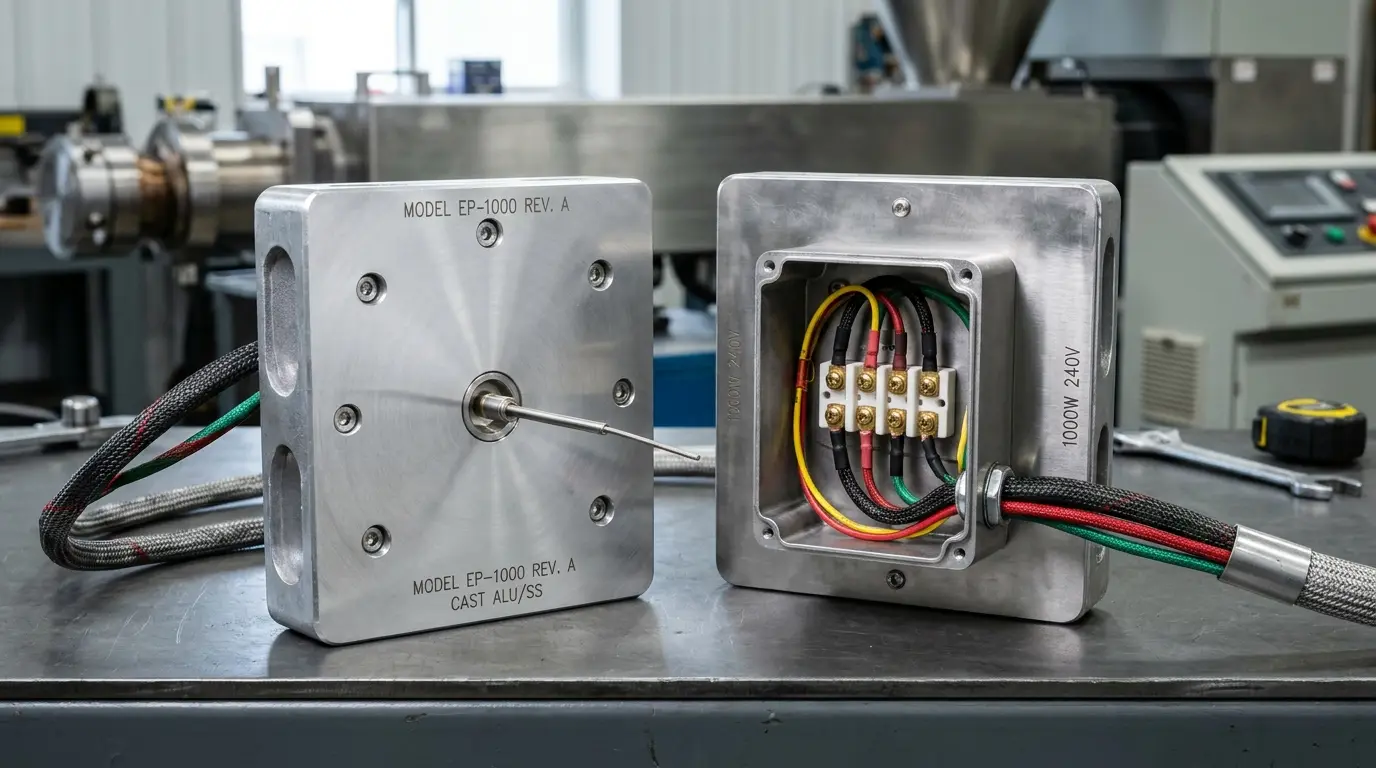
TORQRON supplies thermocouples, PT100–PT1000 resistance thermometers, connection heads, standard and mini plug connectors and compression fittings, as well as sensor assemblies for extruders, reactors and filtration units. To match a replacement, the sensor type, sheath diameter, insertion length, process connection and operating temperature are the key details.
Range and specifications
Range
- Thermocouples
- Resistance thermometers (PT100–PT1000)
- Connection heads
- Standard and mini plug connectors
- Compression fittings
- Sensor assemblies for extruders, reactors and filtration units
What to specify when ordering
- Part number, or a photo of the existing sensor
- Sensor type: thermocouple type or PT100/PT1000
- Sheath diameter and insertion length
- Process connection and connection head or plug
- Operating temperature and medium
Where it is used
Petrochemical
Process sensors (RTDs and thermocouples) for high-temperature zones.
Chemical industry
PT100–PT1000 sensors at temperature monitoring points.
Related services
Spare parts procurement
Replacement sensors identified from a part number or photo.
Technical consulting
Sensor selection and compatibility checks.
Frequently asked questions
Thermocouple or resistance thermometer: which fits?
Thermocouples are robust, respond quickly and cover very high temperatures. Resistance thermometers such as the PT100 are more accurate and stable over time within their range. The choice depends on the temperature, the accuracy required and what the existing controller accepts.
What is the difference between PT100 and PT1000?
Both use a platinum element. A PT100 has a resistance of 100 Ω at 0 °C, a PT1000 has 1000 Ω. The higher resistance of the PT1000 makes it less sensitive to the resistance of the connecting leads.
What do you need to supply a replacement sensor?
A part number is the fastest route. Otherwise the sensor type, sheath diameter, insertion length, process connection, connection head or plug and the operating temperature, or simply a photo of the existing sensor.
Replacement sensors, identified from a photo.
Our technical procurement team identifies any item from a part number, OEM reference, drawing, material specification, application description or a photo.